

It was a sunny Johannesburg spring day in 1993. The jacarandas were in bloom. I took the afternoon off work to drive from Midrand to a specialist business and technical bookshop, Picsie Books, in Rosebank, Johannesburg. I probably had Radiohead’s Creep playing really loudly. The bookshop was up a flight of stairs. You had to buzz to be let in through a slightly sticky blue metal gate. The books crept and seeped beyond the confines of the shop, making navigating the stairs an exploration itself. The building may have since disappeared, but for those that know the area, it was on Jan Smuts Avenue just past Thrupps, at the beginning of the slight uphill before the road narrows into Saxonwold. I picked up my order of Hammer and Champy’s (H&C) book Reengineering the Corporation and Tom Davenport’s Process Innovation: Reengineering Work Through Information Technology.
I’d read other work about BPR in journals and business magazine articles. But it was Hammer’s paper in 1990 Engineering Work: Don't Automate, Obliterate that triggered and shaped 100,000s of careers. Calling it canonical is not an exaggeration.
Here’s a quote from the 1990 article.
The usual methods for boosting performance-process rationalization and automation - haven’t yielded the dramatic improvements companies need. In particular, heavy investments in information technology have delivered disappointing results- largely because companies tend to use technology to mechanize old ways of doing business.
They leave the existing processes intact and use computers simply to speed them up.
But speeding up those processes cannot address their fundamental performance deficiencies. Many of our job designs, work flows, control mechanisms, and organizational structures came of age in a different competitive environment and before the advent of the computer. They are geared toward efficiency and control. Yet the watchwords of the new decade are innovation and speed, service and quality.
It is time to stop paving the cow paths. Instead of embedding outdated processes in silicon and software, we should obliterate them and start over. We should “reengineer” our businesses: use the power of modern information technology to radically redesign our business processes in order to achieve dramatic improvements in their performance.
The new book expanded on that call to action. The work of H&C, Davenport and other books and papers helped provide the theoretical underpinning for Business Process Engineering, which in turn provided the urgent context for ERP. At the time the idea of thinking in process rather than department silo was revolutionary. It moved tech decision-making to the board room and it made many companies dramatically change how they operated. H&C, Davenport and others demanded and created permission for what was for many organizations, a revolution.
The technology changes were fascinating, the battles between fat and thin clients, 3 tier v 2 tier architecture, page locking v row locking databases, whose hardware rocked and many more. The shift from mainframe to client / server was an exciting time for IT. It blew up all sorts of technical assumptions of what was possible. For the first time end users meant pretty much anyone. That was wild. I had a front row seat.
The technology made the vision feasible but without H&C’s clarion call, I suspect we would have had merely incremental business improvements, and slightly better departmental solutions. IT would have remained in the basement. There wouldn’t have been ERP as we know it today. H&C laid out the vision. SAP, Oracle, PeopleSoft, Baan etc and the army of SIs were the mechanisms to make it real. Mckinsey, Accenture, Deloitte, BCG etc also owe H&C a serious debt of gratitude. It created a movement, perhaps even a cult.
It is easy to forget what a big deal BPR actually was. But in the end BPR ended up with rather mixed results. Some companies genuinely transformed, others spent lots of money making new software do what their old software was doing. Lots of people lost their jobs in waves of BPR washing.
BPR’s core weaknesses were its scant regard for the human and organizational elements of change management, and the human impact of process redesign. BPR became a useful foil for brutal headcount reductions, rather than genuine business process reinvention. My work back in those days was probably quite similar to what the cool kids today call an FDE:
I chatted a bit with Claude about this:
Radical, greenfield “obliterate and start over” change proved extremely hard to execute inside real organizations: Hammer’s original prescription underestimated the organizational, political, and cultural resistance involved, and consultancies that sold BPR sometimes oversold how mechanical the redesign process could be.
It largely ignored people and management systems: Champy’s own later critique was that reengineering had focused on processes while neglecting management structures, incentives, and culture, which is what actually determines whether a redesigned process sticks.
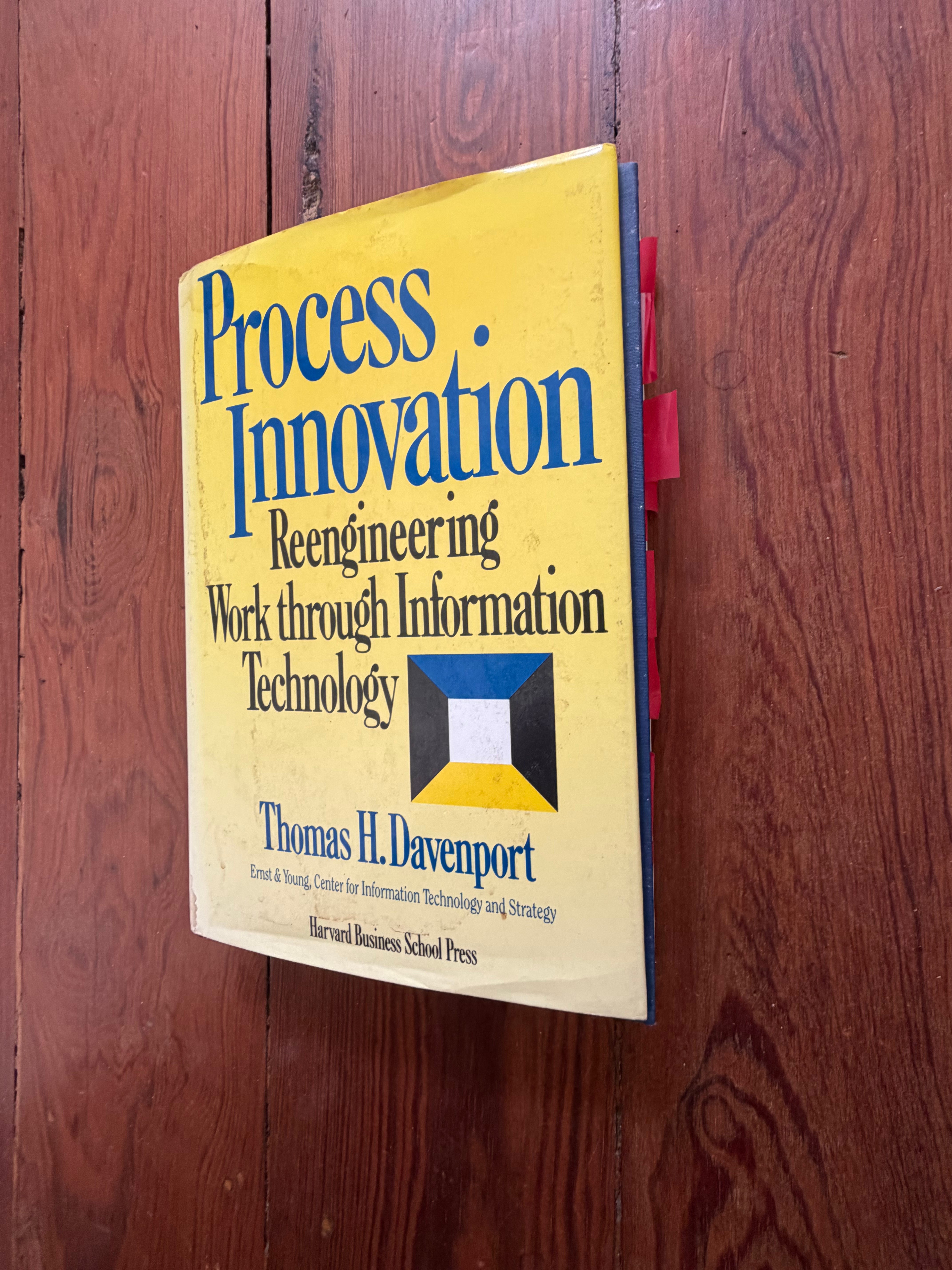
Davenport was stronger on the change management elements of BPR than H&C were. Here’s my rather well worn copy. I think the little plastic 3M thingys had just been invented then, so I used them extensively. The bits I noted were the people and HR related elements.
Here’s a quote or two from Davenport. We need to read this again.
THE RELATIONSHIP BETWEEN PROCESSES AND INFORMATION SYSTEMS
The ultimate goal of a business process innovation effort is to deliver to the enterprise a new process that achieves one or more revolutionary performance objectives. It is not to design, code, and test an information system. The objectives of business process innovation fall into three groups, which tend to lead into one another. Strategic objectives lead to process-related objectives, which lead to information systems-related objectives. In short, information systems objectives are only a portion of the process innovation challenge.
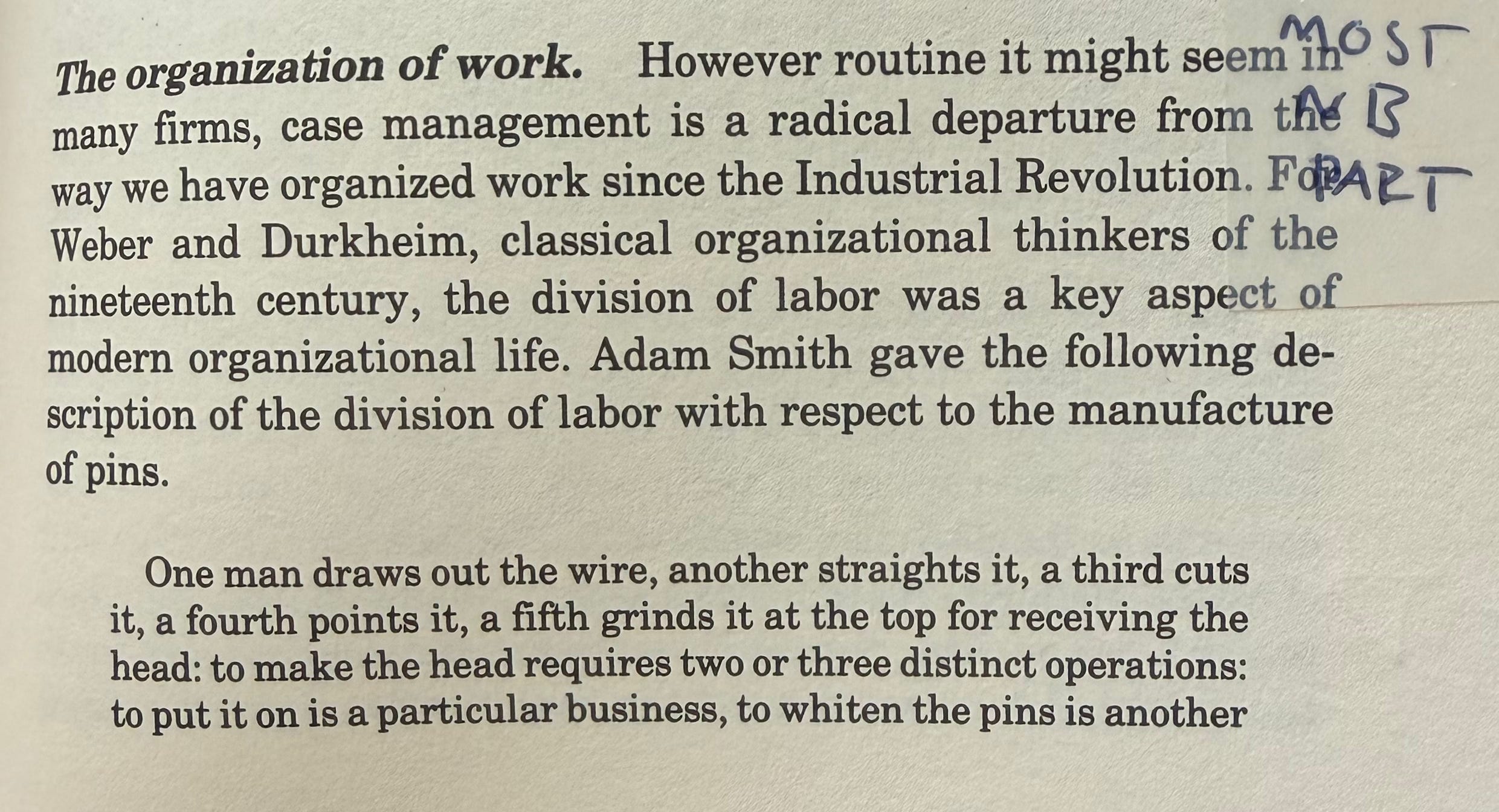
Despite these intellectual roots, process innovation as we have defined it is by no means a simple extension of Taylorism. The human contribution to work is to be celebrated and optimized rather than eliminated. Innovative process designs can leave room for creativity and worker autonomy. Work can be designed as a soft, human system rather than a rigid mechanical one. The act of process design can be a participative activity, although there are often limits to the level of participation that is possible.
Finally, the role of technology in process innovation is not simply to minimize and standardize human labor, but to serve as a catalyst for processes that would never have been possible without enrichment (sic) it. Process innovation offers the possibility of making whole again jobs that have become fragmented and specialized—of creating jobs in which a worker, with the aid of IT, monitors and acts across an entire organization.
It seems a lot of the companies that deployed BPR didn’t read these bit of Davenport’s work. I fear we are making the same mistakes today.
Update: A reader, Bob Bunday, has made this documentary video about BPM. Well worth a watch. Thanks Bob!
A diversion into books
I now have a vaguely significant library of business books. Some seem terribly dated today, but a worthwhile number remain powerfully relevant. I’m really pissed that I can’t find my copy of H&C, I must have lent it to someone a decade or so ago1. I’ll have to seek out a second hand copy. I probably buy 3-4 business or technology related books and a couple of novels a month. My wife buys 3-4 novels a week. That’s our secret to a happy marriage, we both read in the same room with lots of happy silence. Books are groceries. I can’t do the kindle thing. I need the paper for me to remember anything. Nassim Taleb describes the power of reading in physical form far more eloquently than I can.

The books I’ve read on AI can be a split into a couple of piles.
AGI or the lack thereof. I remain convinced AGI is tilting at windmills.
Technical books on ML, LLMs, Bayes, etc. I pretend to understand these.
The history, philosophy and socio-technical elements of AI. Some of these pick up on the negative externalities of AI. The Pope has written a good one.
AI Ethics and Regulation: lots on this. Wild life I lead.
AI and Change Management: mainly in articles though.
I gladly take recommendations. I’ve read Davenport’s AII in on AI, but it wasn’t as compelling as Process Innovation had been.
I worry about two outcomes: both exist in a paradox today.
The first one is what H&C called out. Paving the cow paths. Are we just using AI to make incremental improvements on top of venerable systems and processes? Are we missing out on the opportunity to radically rethink the workplace? AI becomes a useful foil for headcount reductions, but fails to deliver genuine change.
The second is that we assume AI omnipotence. The deification of AI is evident is statements like the problem isn’t the technology, it is how we adapt to it. The Anthropomorphization of AI threatens to undermine what it is to be human. We are at risk of abdicating human agency to machines that aren’t yet fit for purpose, and we short change human ingenuity in the process. Quite a lot of AI technology is actually quite shit. AI slop is an early indication of this. A mix of MCPs, generic LLMs and harnesses does not a system of record make. Those that fetishise the technology seem to be making the same mistakes that the BPR acolytes did.
Business and tech are speaking different languages. More so now than ever.
In this post I have a bit of rant about the state of AI.

More history and hubris
A roughly century before H&C, Frederick Winslow Taylor and others gave us the frameworks for organizing work for the industrial era. In hindsight many of those methods turned out to unhealthy and alienating for the workers, but they made fortunes for Ford and others. Hampy & Champy and Davenport attempted to reset that, but they only partially succeeded.
Today the creators and funders of AI technologies are telling us how to organize work. I’m not convinced they are the right people to be doing this. They make bold emphatic statements that remote work sucks, or that founder mode is essential, you should only hire people from top schools, or that have a chip on their shoulder from a broken childhood. 9-9-6 is the baseline, weekends are for losers. They dismiss HR as irrelevant and woke, and replaceable by IT. One day they suggest AI will take all our jobs, the next that it will be a net job creator. While tech by create is often remarkable, the future of work stuff sprouted by many tech leaders is anecdote, survivor bias and ego, rather than anything vaguely resembling science.
We can do better
We have roughly a century of deep research on how to organize work. Some of it has focused on how to make work fulfilling, other elements on how to keep workers in line. We know a lot about how to enable people to thrive at work, while being more productive. While not perfect, we have a lot of good science to help select, motivate, develop and inspire people.
It is high time those with that knowledge step up and give those running companies clear, grounded guidance on how we can use AI and people to build a fundamentally better workplace. Yes, those owning and funding AI foundational companies have an vital role to play, but they shouldn’t be the ones determining how we must work and live for the next decade or more. We have an over-supply of AI zealots, and a distinct shortage of those championing human ingenuity. The easiest path to pronounce AGI is to belittle human ingenuity.
HR related AI research tends to be written for and read by HR people.
The book I’d like to read today
What I’m missing is that book that does today what H&C did over 30 years ago, and also learns from what they got wrong. H&C set a clear goal of what they wanted businesses to with the technology of time. This was profoundly powerful. It created something that business leaders and technologists could coalesce around. It was a grand but viable vision, not driven by technology but supported by it.
I don’t belittle the massive technological achievements of the last few years, but I would love to read that book that guides us to bring together the best of human ingenuity and AI tooling, and inspires us build great companies: not just for shareholders but for those working there and for the rest of us too.
So much of the academic / thought leadership work I’ve read over the last couple of years seems enthralled and enamoured by the technology. The consulting firms produce what seems at first to be robust, but on deeper reading is merely marketing. There are some academics that rightly warn of the techno-fetishism, but they generally fail to offer alternatives. I’m yet to find the work about AI that galvanises me like H&C and Davenport’s earlier work did. Perhaps it is the cynicism of my age, but it is not for want of looking.
What do we want the future organizational form to be? I suppose the shifting nature of the AI technology itself makes this hard to define, in that the technical progress is rapid and significant. But let’s try.
A lot of the problems organizations are having in actually deploying AI effectively are because they are caught up in mechanics of deploying AI, rather than genuinely rethinking how we organize work. Part of it is vendor overselling, nothing new there.
This isn’t to say I’ve not read some excellent books on AI. For instance, Cory Doctorow’s latest book is brilliant. His reverse centaur is a powerful metaphor.
I may well have overlooked something so I’d welcome reading suggestions.
On ERP itself. Doing ERP differently, and doing different things.
I’m going to spend the last bit of this exploring the state and likely future state of ERP. This is a topic I spend a lot of time on, and I’m likely to continue to nurdle on this for some time to come, so be warned. There are a bunch of posts on this on my substack.
I’d suggest you read Chris Selland’s post tracing the history of enterprise computing since over the last 30 years. His mention of H&C reminded me to write this post.

I’ve defended the ERP incumbents more than most VCs have done.


My reasoning isn’t profound. Many customer organizations will pave the cow path, at least for a considerable while, in part because of a lack of imagination, in part through a well founded distrust of AI hype.
These organizations will make incremental but still significant improvements and automation to existing processes and operations with AI. Some of this AI will come from startups and scaleups, other components will be built or acquired by the ERP vendors themselves. There is a stickiness in these solutions, especially in the larger enterprise.
Large scale change will not be immediate, but it will come, even with large enterprise inertia, ERP will be fundamentally more different in 10 years time than it was 10 or 20 years ago. Incumbents have the opportunity and advantages in terms of data, process depth and relationships that insurgents do not yet have. Whether incumbents actually take advantage of that opportunity remains to be seen. Some will gradually slide into irrelevance. I discuss some of this in my recent essay on Workday.
What could be next?
Let’s explore what that new thing might be. Chris Selland asks: what will become abundant that was previously expensive.
Every one of those SaaS solutions, from the largest ERP down to the smallest point tool, is sold on the same fundamental bargain that was struck in the early ‘90s. The vendor built one model of the process. You adapt your business to it. You pay per seat for the privilege, though there’s some experimentation around the edges with usage-based and value-based pricing.
Yes, Chris is right. While some SaaS products reluctantly allow customization, much of today’s SaaS is a recursion to the mean. If you really need to diverge, usually you find a vendor that is closer to what you need (vertical SaaS for instance), or you can afford it, roll your own.
Ironically, on-prem ERP was far more customization friendly than cloud ERP is. Consultants are skilled in bending the product and bending the customer too.
For thirty-plus years, software was expensive to build and cheap to copy.
That single economic constraint dictated the entire structure of the enterprise software market. It’s why vendors amortized one rigid, opinionated process model across thousands of customers. It’s why enterprise buyers absorbed the friction between that generic model and how their business actually ran. The mismatch was a massive, recurring operational tax—but because building from scratch was impossible, everyone paid it and called it “best practices.”
Now, the cost of generating software is rapidly collapsing to zero. The entire bargain inverts.
Instead of twisting the business to fit the software, you can now build the software to fit the business.
This isn’t an incremental efficiency gain for the SaaS playbook; it’s the elimination of the premise SaaS was built on. Incumbents cannot defend against this by dropping seat prices, because customers were never buying the seat. They were buying someone else’s process—out of necessity.
When you can direct autonomous agents to spin up, integrate, and continuously modify systems tailored precisely to your operating model, the concept of a multi-tenant application suite starts looking as dated as a client-server rack in an on-prem data center.
Chris is directionally right, but is a matter of timing. I’m not sure we are quite as far along this path in the enterprise as he implies. Yes the cost of generating software is dramatically dropping, but deciding what to build and what not to build actually becomes more challenging when these defaults are disrupted. For instance, just because you can build a payroll doesn’t mean you should build one. You don’t decide tax rates and filing formats, the government does. On the other hand, building your own sales compensation solution makes a lot more sense.
I’ve not changed my position on DIY HR tech see the circular saw metaphor. Lots of folks can vibe code, but I think far few fewer people will do it well. Building is fun, maintaining it less so, agents or not. Great design is underrated today, but it will return. Application slop is becoming a thing, and the regulation of AI coding is in its infancy, but it will become a major headache.
Those that build well will probably want to do that as the main part of their job, so they will probably end up working for an organization resembling a software or services company. Knowing when to buy a standard solution and when to build something specific will become a key skill. I’m also not convinced that the off-the-shelf generalist vibe coding tools are up to the job of replacing ERP.
The cost of integration is also dropping dramatically, so this will increase the demand to connect things to the ERP and with each other. It is one of the reasons Kombo is doing so well.

Migration tools are also advancing rapidly, and over time this may undermine incumbent defensibility. Lots to unpack here, but for another day.
The bigger problem will be knowing what your future operating model is. Organizations have delegated or abdicated so much of this to the ERP and the SIs supporting it. Rethinking operating models will require a corporate muscle that has atrophied in many organizations.
Another thing we have done for the last 70 years of business computing is to seek to structure the unstructured, often unsuccessfully. ERP largely failed to bring much to the unstructured and semi-structured world and the messy ad hoc edges. So much work doesn’t live in the ERP or in the myriad of SaaS applications that surround it. This is ripe for immediate exploitation.
I’ll highlight two portfolio companies that might just change how we think about ERP.
I’ve written about Vcola before. It brings control, precision, safety and graceful upgrades to AI generated code. It is the first product I’ve seen that may well enable the promise of enterprise hyper-personalization. “Having labored long in the SaaS ERP salt mines, we started with a blank sheet of paper and asked: what should an ERP look like in the AI era?” More about Vcola here.
BTW they are running an early adopter event in San Francisco 30 September. Invite request here.

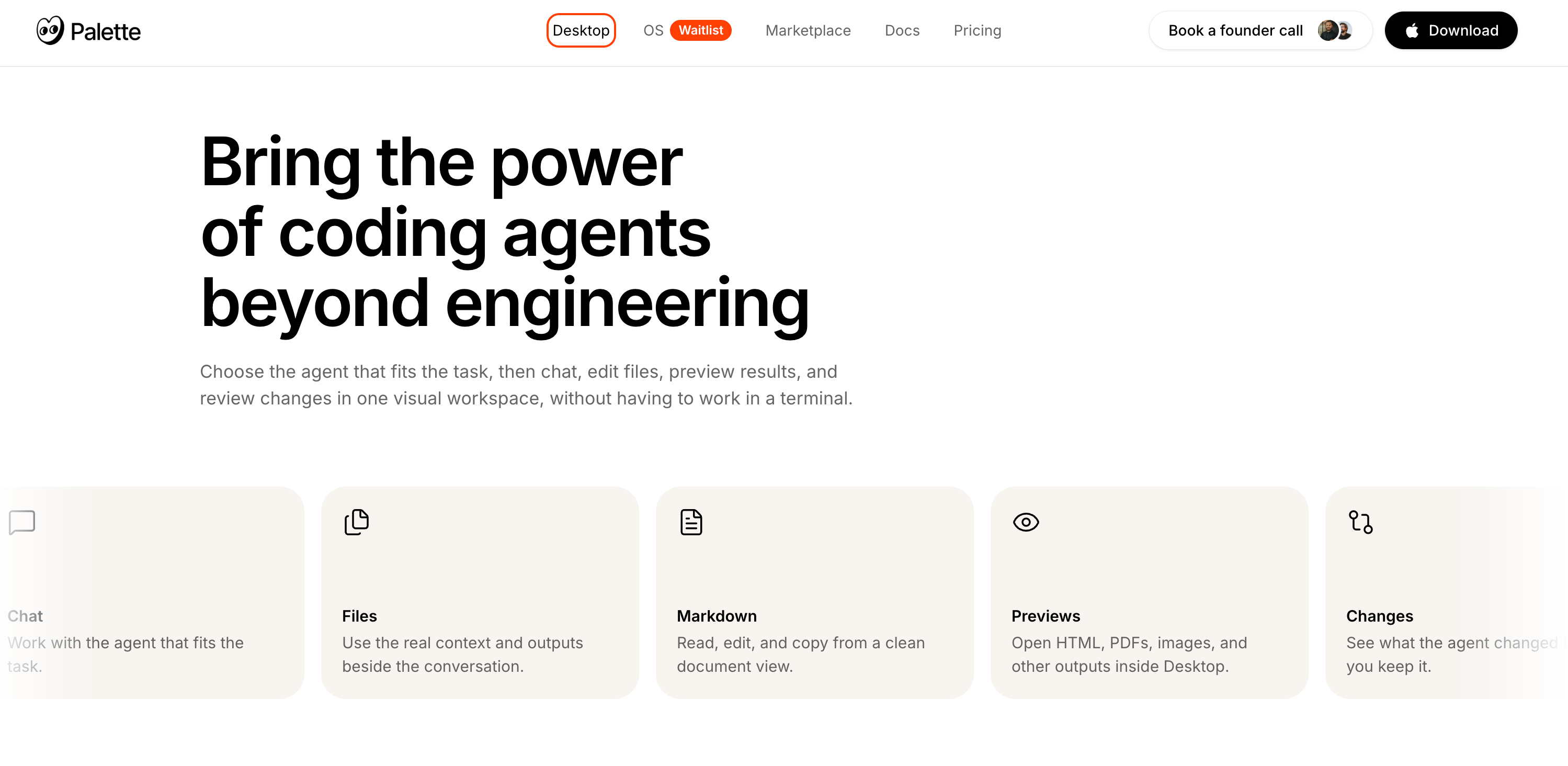
We invested in them because they are a mighty founding team, and they want to explore how to make teams work better (not microsoft teams, but human teams). We backed them really early, and recently doubled down. They seek to be the bridge between what humans and agents do, especially in the messy world of unstructured data. While there are lots of tools to help software engineers work with agents, Palette is the tool that enables the rest of us to get stuff done in a collaborative way with agents. For instance imagine having all the GTM team collaborating on a campaign, amongst each other and with the appropriate agents, trained and with access to the right corporate context. Think of this use case as a GTM OS, and then image others across the organization. At one level it delivers one of H&Cs hopes, making tacit rules and processes accessible to technology. Do try the product out.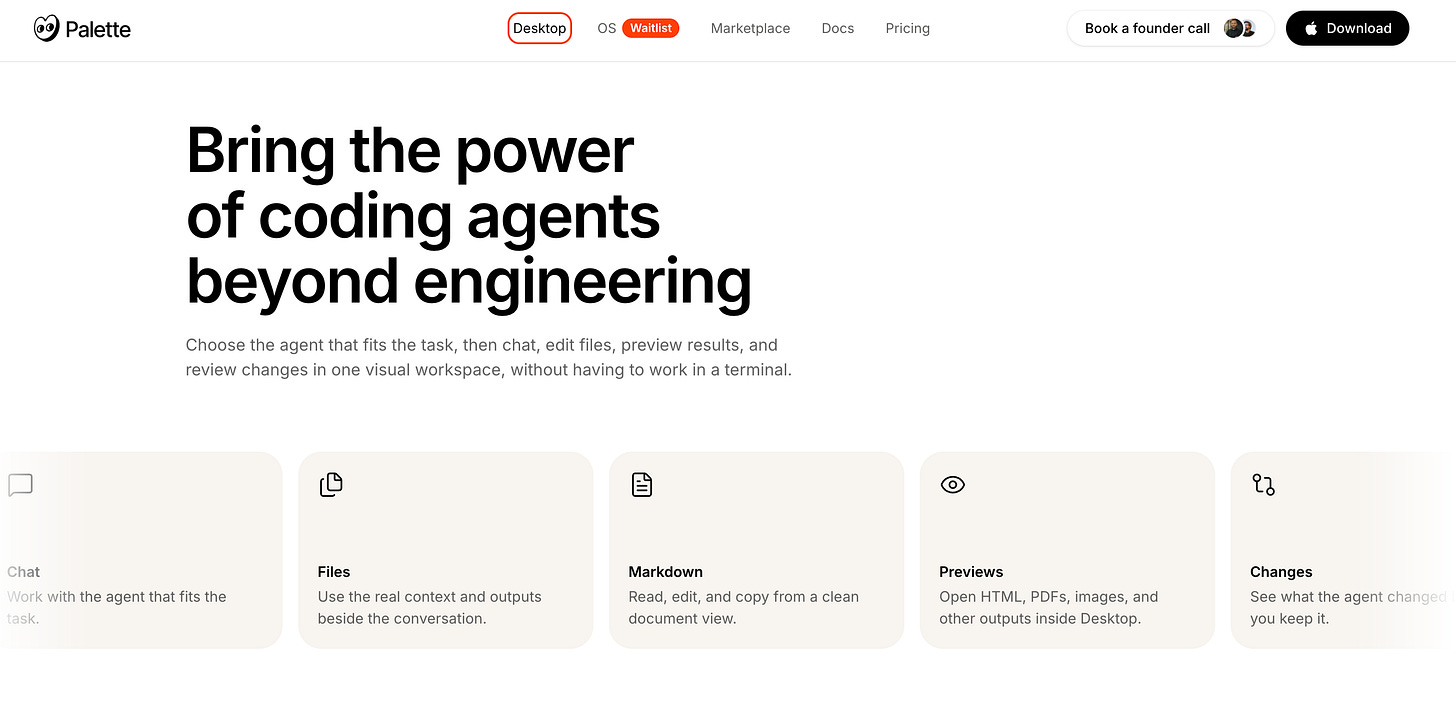



Wrapping this up
How we use AI in business should not solely be the purview of those building, funding and proselytizing AI. We need a more compelling and coherent vision of what a business enabled by AI could be. How does AI make our products and services fundamentally better, not simply AI for the sake of AI. That vision needs to grasp that how it treats people will be the long term determinant of success. Those that deeply understand change management, human ingenuity, motivation, organization design, culture and more need to stand up and make their voice heard. They need to be co-authors of that vision.
If you are writing that book, I’d love to read it.
As usual I’ll end with a tune or two. One of the best bands of the last 30 years. Radiohead - Creep.
And farewell Dolly. You were brilliant, lovely, generous and kind. You will be missed. Here she is with one of South Africa’s most enduring bands. Ladysmith Black Mambazo. Isitimela is the isiZulu word for train.
When I posted this, the person I’d lent my H&C to pinged me. I will be reunited soon.

Davenport getting the 'people' side right while Hammer got the 'process' side right is the whole history of change management in one sentence.
We're seeing the same split happen again with AI in real time, most of what gets funded and built right now is Hammer's half.
The Davenport half, the part about making jobs whole again instead of more fragmented, barely gets discussed. Until now.
Thanks Thomas for a reminder that the technology (AI) was never the hard part, it's the human behaviour part.
The last decades we've seen new technologies applied by companies in desperate need of quick wins, 80/20 magical thinking, or just myopically riding the sugar rush of having a new hammer and hunting for the nearest nail.
With little patience to actually think long term, and even less appetite for risk, companies bolted these solutions on top of existing platforms that were reincarnations of the husks of other platforms to begin with. There's been no radical rethink of what the company processes and ERP of the future should even look like.
Where we once were paving the cow paths, we've now built the interstate. And we're still driving the cow around, sometimes putting it in an Uber if that's what our peers were doing. And nobody remembered why the cow went where it went. Maybe the cow didn't want to move. It just wanted to get to the meadow. Maybe it wanted to have the meadow and the barn in the same place and not walk at all.
If we extrapolate the progress of technology, and look at where the financial and regulatory environment is heading, what would we actually design? What would the cow want? Teleportation? Be left alone?
Hammer and Champy weren't wrong. Their principles got absorbed and are now pretty much universal, including, per your point, the parts about people and change that most implementations quietly dropped. That's the piece worth pushing on: the tech-architecture question (what's the teleportation-era ERP) is the one to speculate about. The harder one is this:
We've built the tools around what we already have, and then asked the people in the organization to adapt to it. When they complained or raised concerns, we patched it with more technology, offered the condescending "better training and communication," and if that didn't work, labeled them "resistant to change."
People know what they want. It's just that they only ask for what they think is possible, and that technology and technologists only offer them what they can credibly deliver. The real challenge is getting technology to build for the outcome itself, not the (t)ask.
CEOs want a crystal ball that shows all their analytics in one place and not have to worry about the rest of the board having their own version of their truth.
CFOs want to run scenarios, have real-time views of their cash flows with confidence, sell, buy, and integrate companies at a moment's notice, and run a continuous zero-day close.
Controllers just want to meet everybody's requirements in an ever-changing landscape.
Accountants? They're on board with all that, as long as it's in Excel, and as long as they get to stop being the human glue that fills the gaps in the integrations.
And the "business"? They're happy to support all that as long as it takes a minimal amount of time, and looks like their trading app or, now, a chat bot that's not like Clippy: intuitive and easy to use, getting to the point without the condescending or off-topic diversions that make you want to yell "operator."
Where does AI fit here? Wherever it needs to. Just not everywhere. It's just a hammer looking for the right Champy.
If we could wish for anything, what would it look like? Then let's figure out how we get there.